Bra Fit Guide 2026: End Wrong Bra Size & Find Your Perfect Fit
Anuncios
The Science of Fit: Why 70% of Women Wear the Wrong Bra Size and How to Fix It in 2026
It’s a staggering statistic: an estimated 70-80% of women are walking around every day wearing the wrong bra size. This isn’t just a matter of minor discomfort; it can lead to a host of issues, from back and neck pain to poor posture, skin irritation, and even a negative impact on self-confidence. In 2026, with all the advancements in garment technology and accessible information, there’s no reason for this widespread problem to persist. Finding your perfect bra fit is not a luxury; it’s a fundamental aspect of self-care and overall well-being.
Anuncios
This comprehensive guide will delve into the reasons behind this pervasive problem, equip you with the knowledge and tools to accurately measure yourself, identify common fit issues, and ultimately, help you discover the transformative power of a truly well-fitting bra. Get ready to say goodbye to discomfort and hello to unparalleled support and confidence!
The Alarming Truth: Why Most Women Get It Wrong
The reasons why so many women struggle to find their perfect bra fit are multifaceted and deeply ingrained in societal norms, lack of education, and even the evolution of the lingerie industry itself. Understanding these factors is the first step towards rectifying the problem.
Anuncios
Outdated Measurement Practices
For decades, the standard bra measurement method involved adding several inches to the underbust measurement. This outdated practice often resulted in women being advised to wear a band size that was too loose, leading to a lack of support and the band riding up. While many retailers have moved away from this, the legacy of these methods still influences how some women approach bra shopping.
Fluctuating Body Shapes
A woman’s body is constantly changing. Weight fluctuations, hormonal shifts, pregnancy, breastfeeding, and aging all impact breast size and shape. A bra that fit perfectly a year ago might not offer the same support and comfort today. Many women fail to remeasure themselves regularly, relying on old sizes that are no longer appropriate.
Lack of Education and Awareness
Formal education on bra fitting is largely absent. Most women learn about bra sizing through trial and error, or from well-meaning but often misinformed friends or family. The nuances of cup depth, wire width, and strap placement are often overlooked, leading to compromises in fit.
Inconsistent Sizing Across Brands
Just like clothing, bra sizes are not universally standardized. A 34C in one brand might fit differently than a 34C in another. This inconsistency makes it incredibly difficult for women to confidently purchase bras without trying them on, and even then, knowing what to look for in a good fit can be challenging.
Focus on Aesthetics Over Function
The lingerie industry often heavily emphasizes aesthetics – lace, patterns, and push-up features – sometimes at the expense of functional fit and proper support. While beautiful lingerie is wonderful, it should never come at the cost of comfort and health.
The Hidden Costs of a Bad Bra Fit
Wearing the wrong bra size isn’t just an inconvenience; it can have tangible negative effects:
- Physical Discomfort: Digging straps, underwire poking, band riding up, breast spillage, and constant adjusting are daily realities for many.
- Health Issues: Chronic back, shoulder, and neck pain, particularly for women with larger breasts, can be exacerbated by inadequate support. Skin irritation, chafing, and even nerve compression are also possible.
- Poor Posture: Without proper support, women may slouch to compensate for breast weight, leading to long-term postural problems.
- Impact on Clothing: A poorly fitting bra can ruin the look of an outfit, creating bulges, lines, or an unflattering silhouette.
- Reduced Confidence: Feeling uncomfortable or self-conscious about how your clothes fit can diminish self-esteem.
By addressing these issues head-on, we can empower more women to find their perfect bra fit and experience the profound positive changes it brings.
The Foundation of Fit: How to Measure Yourself Accurately in 2026
The journey to finding your perfect bra fit begins with accurate measurements. Forget old wives’ tales; these modern methods are designed for precision. You’ll need a soft measuring tape and ideally, wear a non-padded bra that fits reasonably well, or no bra at all.
Step 1: Measure Your Band Size (Underbust)
Your band provides about 80-90% of the support, making this measurement crucial.
- Stand upright and exhale fully to get the smallest measurement.
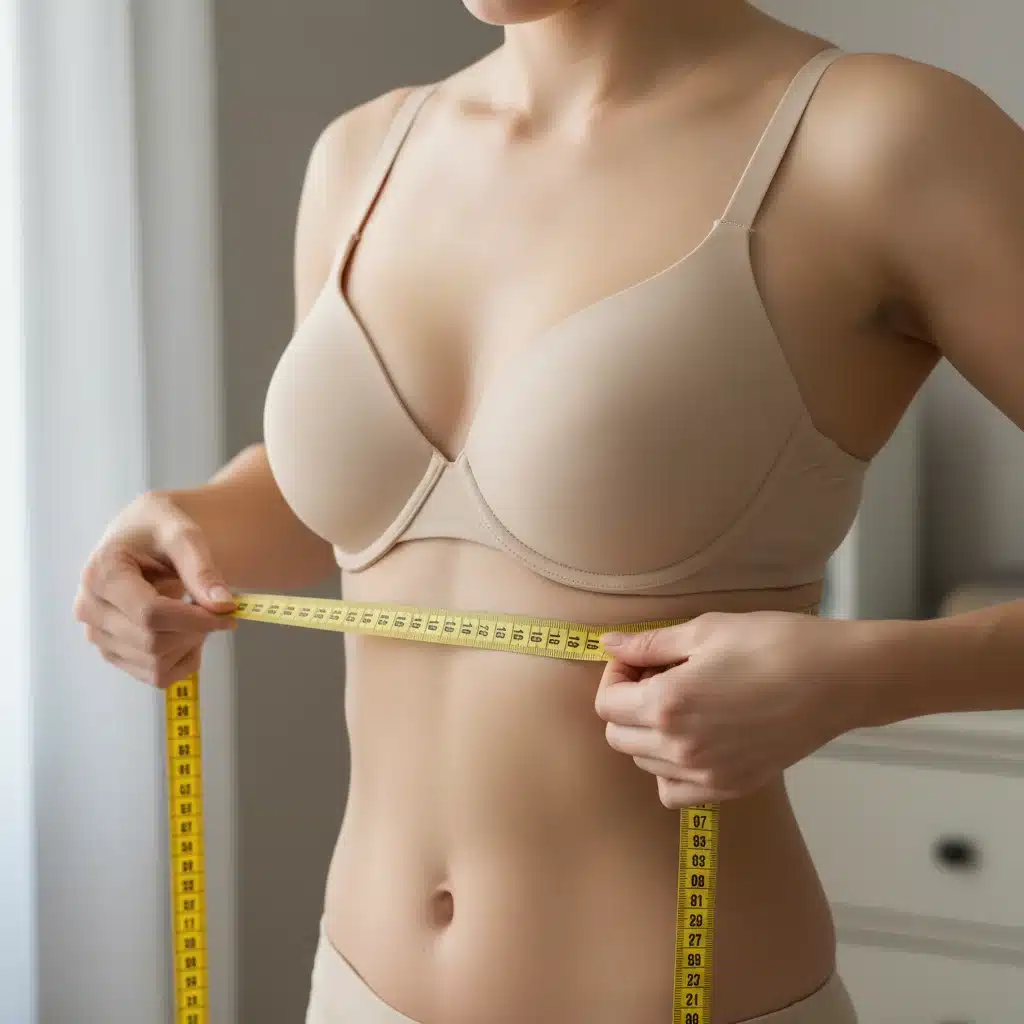
- Wrap the measuring tape firmly around your rib cage directly under your bust, where your bra band would sit. Ensure the tape is level all the way around your back.
- Read the measurement in inches.
- Modern Band Sizing: Do NOT add inches. If you measure, say, 32.5 inches, round to the nearest even number. So, 32.5 would be a 32 band if it feels snug but comfortable, or a 34 if you prefer a slightly looser fit. Most brands use even numbers for band sizes (30, 32, 34, etc.).
Step 2: Measure Your Bust Size (Overbust)
This measurement helps determine your cup size.
- Wrap the measuring tape loosely around the fullest part of your bust, typically across the nipples.
- Make sure the tape is level across your back and not too tight or too loose.
- Read the measurement in inches.
Step 3: Calculate Your Cup Size
Subtract your band measurement (Step 1) from your bust measurement (Step 2).
- 0-1 inch difference = AA cup
- 1 inch difference = A cup
- 2 inch difference = B cup
- 3 inch difference = C cup
- 4 inch difference = D cup
- 5 inch difference = DD/E cup
- 6 inch difference = DDD/F cup
- 7 inch difference = G cup
- And so on, increasing by one cup size for every inch.
Example: If your band measurement is 34 inches and your bust measurement is 37 inches, the difference is 3 inches, suggesting a 34C.
Important Considerations for Measurement Accuracy:
- When to Measure: Your breast size can fluctuate throughout your menstrual cycle. Try to measure at a neutral point, perhaps mid-cycle.
- Repeat Regularly: Aim to remeasure yourself every 6-12 months, or whenever you notice significant changes in your body.
- Assistance: If possible, have someone help you measure, especially for the back, to ensure the tape remains level.
Remember, these measurements are a starting point. They give you a strong indication of your correct size, but trying on bras is still essential to confirm your perfect bra fit.
Decoding the Fit: Identifying Common Bra Fit Problems
Now that you have your measurements, it’s time to put them to the test. Knowing what a bad fit looks like is just as important as knowing what a good fit feels like. Here are the most common signs that your bra isn’t giving you the perfect bra fit:
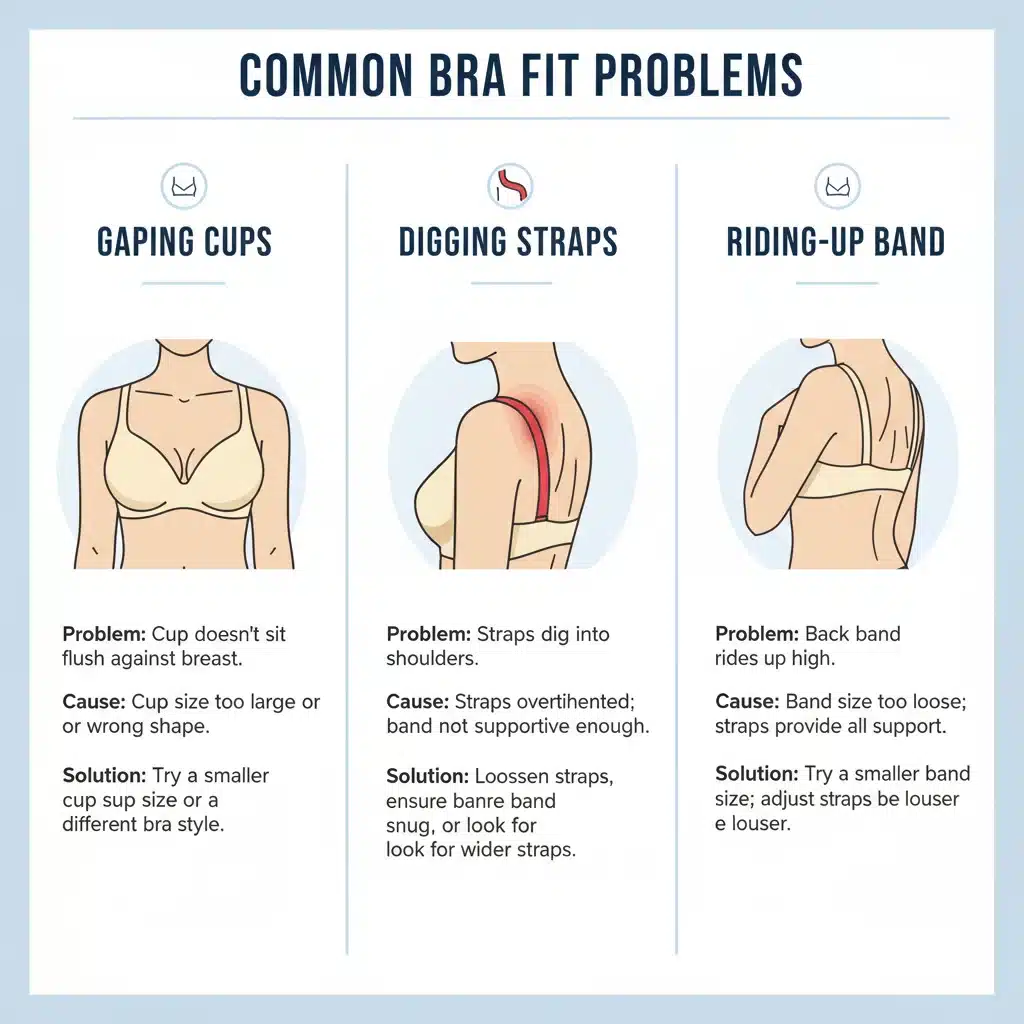
1. The Band Rides Up Your Back
- Problem: This is the most common sign that your band is too large. The band should sit firmly and horizontally across your back, parallel to the floor.
- Solution: Go down a band size (e.g., from 36 to 34). If the cups then feel too small, you’ll need to go up a cup size to maintain volume (e.g., from 36C to 34D). This is known as "sister sizing."
2. Cups Gape or Wrinkle
- Problem: If there’s extra space in the top or sides of your cups, or if the fabric wrinkles, your cups are too big.
- Solution: Go down a cup size (e.g., from C to B).
3. Cups Overflow (Spillage)
- Problem: If your breast tissue is spilling out over the top, sides, or bottom of your cups, they are definitely too small. This creates an unflattering "double-breast" effect.
- Solution: Go up a cup size (e.g., from C to D).
4. Underwire Digs In, Pokes, or Sits on Breast Tissue
- Problem: The underwire should fully encapsulate your breast tissue, sitting flat against your rib cage, not on your breast. If it’s digging into your armpit, sternum, or breast, the cups might be too small, too shallow, or the wire is too narrow.
- Solution: Go up a cup size, or try a different bra style with a wider underwire or deeper cup. Ensure the center gore (the piece between the cups) lies flat against your sternum.
5. Straps Dig Into Your Shoulders
- Problem: This is a classic sign that your band is not providing enough support, causing your straps to bear too much weight. Straps should only provide about 10-20% of the support.
- Solution: Tighten your band (go down a size) or adjust your straps. If tightening the band isn’t an option (because it’s already snug), then you might need a bra with wider, more supportive straps, or a different style.
6. Center Gore Doesn’t Lie Flat
- Problem: The center panel between the cups (the ‘gore’) should lie completely flat against your sternum, without lifting away from your body. If it’s floating, your cups are too small or too shallow.
- Solution: Go up a cup size or try a different bra style.
7. Constant Adjusting
- Problem: If you find yourself constantly tugging, pulling, or adjusting your bra throughout the day, it’s a clear indicator of a poor fit.
- Solution: Re-evaluate both your band and cup size using the steps above.
Achieving the Perfect Bra Fit: Tips for Bra Shopping in 2026
Armed with your measurements and knowledge of common fit issues, you’re ready to tackle bra shopping. Here’s how to ensure you find your perfect bra fit:
1. Always Start with the Band
When trying on a bra, always fasten it on the loosest hook. This allows for the natural stretching of the elastic over time. If it’s too loose on the tightest hook, the band is too big. The band should feel snug but comfortable, allowing only two fingers to slide underneath it at the back.
2. Scoop and Swoop
This technique is vital for ensuring all breast tissue is properly seated in the cup. After putting on your bra, lean forward slightly and use your opposite hand to scoop all breast tissue from under your armpit and side into the cup. Stand upright and adjust the cup so the wire sits flat against your rib cage.
3. Check the Center Gore
After scooping and swooping, ensure the center gore lies completely flat against your sternum. If it’s lifting, go up a cup size.
4. Adjust the Straps
Once the band and cups are correct, adjust the straps so they are firm but not digging into your shoulders. Remember, they provide minimal support; the band does most of the work.
5. Do a Movement Test
Move around! Raise your arms, bend over, twist your torso. Does the bra stay in place? Do the wires poke? Does the band ride up? If anything feels off, it’s not the right fit.
6. Try on Multiple Styles and Brands
Don’t get discouraged if the first few don’t work. Different styles (balconette, full coverage, plunge) and brands fit differently. Experiment to see what works best for your breast shape and body type. Some women may find they need different styles for different outfits or activities.
7. Consider Professional Bra Fitting
While self-measurement is a great start, a professional bra fitter offers invaluable expertise. They can spot nuances in fit that you might miss and recommend styles you hadn’t considered. Look for reputable lingerie boutiques or department stores with trained fitters.
8. Embrace Sister Sizes
Understanding sister sizes can open up more options. If your perfect bra fit is a 34C, sister sizes include 32D (smaller band, larger cup volume) and 36B (larger band, smaller cup volume). While not identical, they can be good alternatives if your exact size isn’t available, or if you prefer a slightly different band tension.
Beyond the Basics: Advanced Bra Fit Considerations for 2026
As we move further into 2026, the world of lingerie continues to evolve, offering innovative designs and specialized solutions. Achieving your perfect bra fit isn’t just about band and cup size; it also involves understanding your unique needs and the nuances of different bra types.
Breast Shape Matters
Just as bodies come in various shapes, so do breasts. Common breast shapes include:
- Round: Evenly full.
- Bell Shape: Fuller at the bottom, narrower at the top.
- East-West: Pointing outwards.
- Side Set: Wider gap between breasts.
- Slender: Longer than they are wide.
- Asymmetrical: One breast noticeably larger than the other.
Understanding your breast shape can guide you towards styles that offer the best coverage and support. For example, a plunge bra might work well for side-set breasts, while a full-coverage bra could be ideal for bell-shaped or round breasts needing more lift.
The Role of Fabric and Construction
Modern bras utilize a variety of materials and construction techniques, each impacting the fit and feel:
- Stretch vs. Non-Stretch Fabric: Stretch fabrics (like those with spandex) offer more flexibility and can be more forgiving, while non-stretch fabrics provide firmer support and shaping.
- Seamed vs. Seamless Cups: Seamed cups (often with multiple panels) can offer superior shaping and support, especially for larger busts. Seamless (molded) cups provide a smooth look under clothing.
- Wire Types: Traditional underwires are common, but some bras feature flexible wires, side boning, or even wireless designs that still offer excellent support (e.g., modern wire-free technology).
- Strap Design: Wide, padded straps distribute weight better for larger busts, while convertible or multi-way straps offer versatility for different outfits.
Specialty Bras for Specific Needs
Your perfect bra fit might vary depending on the activity or occasion:
- Sports Bras: Essential for physical activity. They come in varying levels of support (light, medium, high impact) and are designed to minimize breast movement. A good sports bra is crucial for breast health and comfort during exercise.
- Maternity and Nursing Bras: Designed to accommodate fluctuating breast sizes during pregnancy and provide easy access for breastfeeding. Comfort and adjustability are key here.
- Strapless/Convertible Bras: Offer versatility for various necklines and sleeveless tops. Ensure the band is extra firm, as it’s the sole source of support.
- Minimizer Bras: Designed to visually reduce the bust projection, often by distributing breast tissue more broadly across the chest.
- Bralettes: While often comfortable and stylish, many bralettes offer lighter support and may not be suitable for all breast sizes or for those needing significant lift.
The Importance of Bra Care
Proper bra care extends the life of your bras and helps maintain their fit. Hand washing with a gentle detergent and air drying are generally recommended. Avoid putting underwire bras in a washing machine, as it can damage the wires and elastic.
The Transformative Power of a Perfect Bra Fit
Once you experience the true comfort and support of a perfect bra fit, there’s no going back. The benefits extend far beyond just physical comfort:
- Improved Posture: A well-fitting bra properly supports your breasts, taking strain off your back and shoulders, encouraging better posture.
- Enhanced Silhouette: Clothes drape better, and you’ll notice a more streamlined and flattering shape under all your outfits.
- Reduced Pain: Say goodbye to nagging back, neck, and shoulder pain caused by inadequate support.
- Increased Confidence: Feeling comfortable and looking great in your clothes naturally boosts self-esteem.
- Better Breast Health: Proper support can help minimize ligament stretching and discomfort during movement.
Investing time and effort into finding your perfect bra fit is an investment in your health, comfort, and confidence. It’s a small change that can make a monumental difference in your daily life.
Looking Ahead: Bra Fitting in 2026 and Beyond
As technology advances, so too does the potential for even more personalized bra fitting experiences. In 2026 fashion, we are seeing a greater integration of:
- AI-Powered Virtual Fitters: Apps and online tools that use AI and 3D scanning to analyze body shape and recommend sizes with increasing accuracy.
- Custom-Made Bras: While still niche, the ability to create truly custom-fitted bras based on individual body scans is becoming more accessible.
- Sustainable and Ethical Lingerie: A growing emphasis on environmentally friendly materials and ethical production practices means you can feel good about your purchases.
- Inclusivity: Brands are expanding their size ranges and offering more diverse styles to cater to a wider spectrum of body types and needs.
The future of bra fitting is bright, with a clear trend towards personalization, comfort, and sustainability. However, even with cutting-edge technology, the fundamental principles of accurate measurement and understanding how a bra should feel will remain paramount.
Conclusion: Embrace Your Perfect Bra Fit
The statistic that 70-80% of women wear the wrong bra size is a call to action. It highlights a widespread issue that impacts comfort, health, and confidence. By understanding the common pitfalls, learning how to accurately measure, and recognizing the signs of an improper fit, you are well on your way to achieving your perfect bra fit.
Don’t settle for discomfort or compromise. Take the time to reassess your bra drawer, measure yourself regularly, and seek out bras that truly support and flatter your unique body. When you find that perfect fit, you’ll not only look better, but you’ll feel better, empowered to tackle your day with newfound comfort and confidence. Make 2026 the year you finally discover the transformative power of a truly well-fitting bra!