Mesh Wi-Fi 2026: Revolutionizing Home Connectivity with 30% Faster Speeds

Anuncios
Enhancing Home Connectivity: The 2026 Update to Mesh Wi-Fi Systems for 30% Faster Speeds Across Your Property
In an increasingly connected world, reliable and fast internet is no longer a luxury but a fundamental necessity. Our homes are transforming into smart ecosystems, brimming with devices that demand seamless connectivity – from streaming 4K content and competitive online gaming to managing smart home appliances and supporting remote work. Traditional single-router Wi-Fi setups often struggle to meet these escalating demands, especially in larger homes or properties with challenging layouts, leading to frustrating dead zones, dropped connections, and inconsistent speeds. This is where mesh Wi-Fi systems have emerged as a game-changer, offering expansive and consistent coverage by distributing multiple access points throughout your property.
As technology relentlessly marches forward, the landscape of wireless networking is on the cusp of another significant evolution. The year 2026 is poised to usher in a new era for home connectivity, with a groundbreaking update to mesh Wi-Fi 2026 systems that promises to deliver an astounding 30% faster speeds across your entire property. This isn’t just a minor incremental improvement; it’s a leap forward that will redefine our expectations of home internet performance and reliability. Imagine a world where every corner of your house, every smart device, and every online activity benefits from unparalleled speed and stability. This comprehensive guide will delve deep into the exciting advancements driving the mesh Wi-Fi 2026 update, exploring the underlying technologies, the tangible benefits for users, and what you need to know to future-proof your home network.
Anuncios
The Evolution of Mesh Wi-Fi: A Brief Retrospective
Before we dive into the specifics of mesh Wi-Fi 2026, it’s beneficial to understand the journey that brought us here. The concept of mesh networking isn’t new; it has been utilized in various forms for decades, particularly in military and industrial applications where robust and self-healing networks are critical. However, its adoption for consumer home use is a relatively recent phenomenon, gaining significant traction in the mid-2010s.
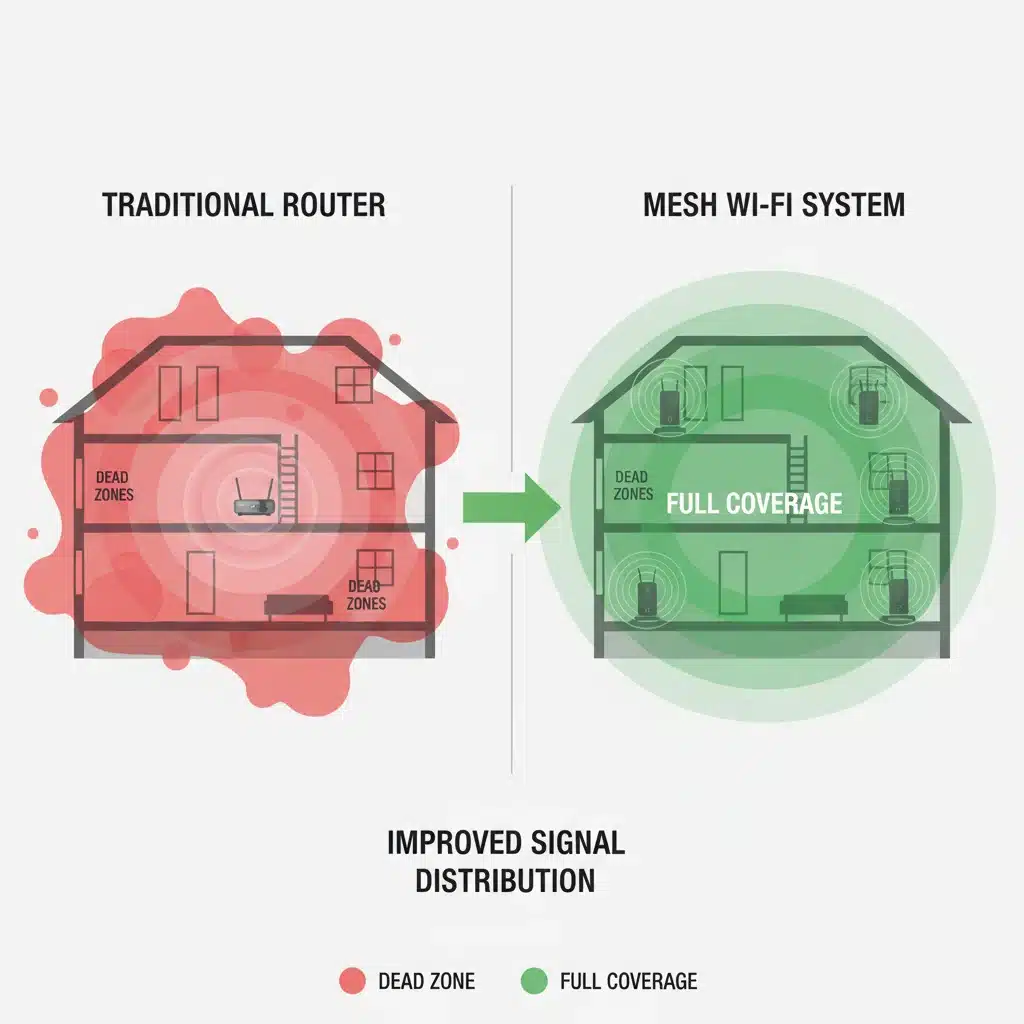
Traditional Wi-Fi setups typically rely on a single router broadcasting a signal from a central location. While effective for smaller apartments or open-plan spaces, this approach often falls short in larger or multi-story homes. Walls, floors, and even furniture can degrade the Wi-Fi signal, creating ‘dead zones’ where connectivity is weak or non-existent. Range extenders and powerline adapters offered partial solutions, but often introduced their own set of problems, such as reduced bandwidth, multiple network names, and complex setups.
Anuncios
Mesh Wi-Fi systems revolutionized home networking by introducing a network of interconnected nodes (or satellites) that communicate with each other to create a single, unified Wi-Fi network. Instead of a single point of failure or weak signal, mesh systems intelligently route data through the strongest available path, ensuring consistent coverage and optimal speeds across a much wider area. Key characteristics of early mesh systems included:
- Seamless Roaming: Devices automatically switch to the strongest node as you move around your home, without manual intervention or dropped connections.
- Single Network Name (SSID): Unlike traditional setups with extenders that often create separate networks, mesh systems present a single Wi-Fi name, simplifying connectivity.
- Easy Setup: Most mesh systems are designed for plug-and-play installation, often managed via intuitive smartphone apps.
- Self-Healing: If one node fails, the network can reroute traffic through other nodes to maintain connectivity.
Over the years, mesh Wi-Fi has seen continuous improvements, integrating newer Wi-Fi standards like Wi-Fi 5 (802.11ac) and Wi-Fi 6 (802.11ax), which brought higher theoretical speeds, better efficiency, and improved handling of multiple devices. These advancements laid the groundwork for the monumental changes anticipated with mesh Wi-Fi 2026.
The Core Technologies Driving Mesh Wi-Fi 2026
The promise of 30% faster speeds and enhanced connectivity in mesh Wi-Fi 2026 systems isn’t magic; it’s the result of several cutting-edge technological innovations working in concert. The primary driver behind this significant performance boost is the widespread adoption and optimization of Wi-Fi 7, also known as 802.11be or Extremely High Throughput (EHT).
Wi-Fi 7 (802.11be) – The Foundation of Speed
Wi-Fi 7 is the latest generation of Wi-Fi technology, building upon the strengths of Wi-Fi 6 and 6E while introducing revolutionary features. While Wi-Fi 6 focused on improving efficiency in crowded network environments, Wi-Fi 7 is designed for unprecedented speed and ultra-low latency, making it ideal for the demands of 2026 and beyond. Key features of Wi-Fi 7 that will power mesh Wi-Fi 2026 include:
- 320 MHz Channels: Wi-Fi 7 doubles the channel width of Wi-Fi 6E (from 160 MHz to 320 MHz) in the 6 GHz band. Wider channels mean more data can be transmitted simultaneously, leading to significantly higher speeds. This is analogous to widening a highway from two lanes to four, allowing more cars (data packets) to pass at once.
- 4096-QAM (Quadrature Amplitude Modulation): This advanced modulation scheme allows more data to be packed into each signal. While Wi-Fi 6 used 1024-QAM, Wi-Fi 7’s 4096-QAM increases data density by 20%, directly contributing to higher throughput.
- Multi-Link Operation (MLO): MLO is a groundbreaking feature that allows devices to send and receive data simultaneously over multiple frequency bands (2.4 GHz, 5 GHz, and 6 GHz) and channels. This aggregation of bandwidth effectively creates a superhighway for data, dramatically increasing speeds and reducing latency. If one band experiences interference, the connection can seamlessly switch or utilize other bands, ensuring robust and reliable connectivity. This is particularly beneficial for mesh Wi-Fi 2026 systems, as it optimizes communication between nodes and client devices.
- Preamble Puncturing: This feature enhances spectrum utilization by allowing Wi-Fi 7 devices to ignore portions of a channel that are occupied by other transmissions. Instead of waiting for an entire channel to clear, devices can use the available ‘punctured’ parts, improving efficiency and reducing latency in congested environments.
Advanced Backhaul Optimization
In a mesh system, ‘backhaul’ refers to the dedicated connection between the different mesh nodes. The performance of this backhaul is critical to the overall speed and efficiency of the network. For mesh Wi-Fi 2026, manufacturers are focusing on:
- Dedicated 6 GHz Backhaul: Leveraging the clean, wide channels of the 6 GHz band for exclusive backhaul traffic significantly reduces interference and boosts inter-node communication speeds. This dedicated high-speed link ensures that data can flow rapidly between nodes without competing with client device traffic.
- Wired Ethernet Backhaul: While wireless backhaul is convenient, for those seeking the absolute best performance, mesh Wi-Fi 2026 systems will continue to support and often optimize wired Ethernet backhaul. Connecting nodes via Ethernet cables provides a rock-solid, high-speed backbone, eliminating wireless interference and maximizing speeds.
- AI-Powered Network Management: Future mesh systems will increasingly incorporate AI and machine learning algorithms to intelligently manage network traffic, optimize node placement suggestions, predict congestion, and dynamically adjust channel selection for peak performance. This proactive management ensures your mesh Wi-Fi 2026 system is always operating at its best.
Benefits of Upgrading to Mesh Wi-Fi 2026
The advancements in mesh Wi-Fi 2026 translate into a host of tangible benefits for the average homeowner, significantly improving their daily digital experience.
1. Blazing Fast Speeds, Everywhere
The most immediate and impactful benefit is the promised 30% increase in speed. This isn’t just a theoretical number; it means:
- Faster Downloads and Uploads: Large files, 4K movies, and game updates will download in a fraction of the time.
- Seamless 8K Streaming: With higher bandwidth, multiple users can stream 8K content simultaneously without buffering or degradation in quality.
- Lag-Free Online Gaming: Ultra-low latency provided by Wi-Fi 7 and MLO will be a boon for competitive gamers, eliminating frustrating delays.
- Smoother Video Conferencing: Essential for remote work and learning, video calls will be crystal clear and stable, even with multiple participants in the home.
2. Unrivaled Coverage and Reliability
Beyond speed, mesh Wi-Fi 2026 systems will further solidify their reputation for comprehensive coverage:
- Elimination of Dead Zones: The enhanced communication between nodes and intelligent signal routing ensures that every nook and cranny of your property, from the basement to the attic, enjoys strong, reliable Wi-Fi.
- Consistent Performance: Whether you’re in the living room, bedroom, or even out on the patio, your devices will maintain optimal connection quality, thanks to improved roaming and MLO.
- Robust Smart Home Ecosystem: With more smart devices demanding constant connectivity, a reliable mesh Wi-Fi 2026 system becomes the backbone of a truly smart home, ensuring all devices, from smart lights to security cameras, operate flawlessly.
3. Enhanced Capacity for More Devices
The average number of internet-connected devices in a household continues to climb. From smartphones and laptops to smart TVs, gaming consoles, wearables, and an ever-growing array of IoT gadgets, our networks are under increasing strain. Mesh Wi-Fi 2026 systems, powered by Wi-Fi 7, are designed to handle this proliferation of devices with ease:
- Increased Throughput: Wi-Fi 7’s ability to process more data simultaneously means that even with numerous devices active, overall network performance remains high.
- Better Efficiency: Technologies like OFDMA (Orthogonal Frequency-Division Multiple Access, carried over from Wi-Fi 6) and MLO ensure that bandwidth is allocated efficiently, preventing bottlenecks and maintaining smooth operation for all connected devices.
4. Future-Proofing Your Home Network
Investing in mesh Wi-Fi 2026 technology is an investment in the future. As internet service providers (ISPs) roll out even faster broadband plans (multi-gigabit speeds are becoming more common), your home network needs to be capable of fully utilizing that bandwidth. A Wi-Fi 7 mesh system ensures that your internal network doesn’t become the bottleneck, allowing you to take full advantage of future internet speed upgrades and emerging technologies that will demand high bandwidth and low latency.
What to Look for in a Mesh Wi-Fi 2026 System
When the time comes to upgrade your home network to take advantage of the mesh Wi-Fi 2026 advancements, here are key features and considerations to keep in mind:
- Wi-Fi 7 (802.11be) Certification: Ensure the system explicitly states Wi-Fi 7 compatibility. This guarantees you’re getting the latest standards and features like MLO and 320 MHz channels.
- Dedicated 6 GHz Backhaul: For optimal wireless performance, look for systems that utilize the 6 GHz band specifically for inter-node communication.
- Multi-Gigabit Ethernet Ports: To truly leverage faster speeds, both for your internet connection and for wired devices, ensure the main router node and potentially satellite nodes have 2.5 Gbps or even 10 Gbps Ethernet ports.
- Number of Nodes: The size and layout of your home will dictate how many nodes you need. Most systems come with a 2-pack or 3-pack, but you can usually expand as needed. Consider your home’s square footage and any challenging areas.
- Processor and RAM: A more powerful processor and ample RAM within each node contribute to better performance, especially when handling multiple devices and complex network traffic.
- Security Features: Look for robust security protocols (like WPA3), parental controls, guest network options, and built-in threat detection to keep your network safe.
- Ease of Setup and Management: A user-friendly mobile app for initial setup, network monitoring, and settings adjustment is a significant advantage.
- Smart Home Integration: Some mesh systems offer integrated smart home hubs (e.g., Zigbee, Thread) or voice assistant compatibility, simplifying your smart home ecosystem.
Preparing Your Home for Mesh Wi-Fi 2026
While mesh Wi-Fi 2026 systems are designed for ease of use, a little preparation can go a long way in maximizing their performance:
- Assess Your Current Needs: Before upgrading, consider your internet plan speed, the number of devices you have, and any current connectivity issues (dead zones, slow speeds). This will help you choose the right mesh Wi-Fi 2026 system for your specific requirements.
- Check Your Internet Service Provider (ISP): Ensure your ISP offers speeds that can benefit from Wi-Fi 7. While Wi-Fi 7 will improve internal network speeds, your overall internet speed is still capped by your ISP’s plan. Many ISPs are rolling out multi-gigabit options, so it’s worth checking if you can upgrade your service.
- Consider Wired Backhaul: If your home is already wired with Ethernet, or if you’re planning renovations, consider leveraging wired backhaul for your mesh nodes. This provides the most stable and fastest connection between nodes, freeing up wireless spectrum for client devices.
- Optimal Node Placement: Even with advanced mesh Wi-Fi 2026 technology, strategic placement of nodes is crucial. Aim for central locations, away from large metal objects, thick walls, and interference sources like microwaves or cordless phones. The mobile apps of most mesh systems provide guidance on optimal placement.
- Update Client Devices: To fully experience the 30% faster speeds of mesh Wi-Fi 2026, your client devices (laptops, smartphones, smart TVs) will ideally need to support Wi-Fi 7. While Wi-Fi 7 is backward compatible with older Wi-Fi standards, only Wi-Fi 7 compatible devices can take full advantage of features like MLO and 320 MHz channels. As 2026 approaches, more devices will naturally integrate Wi-Fi 7 chipsets.
The Future Beyond 2026: What’s Next for Home Connectivity?
While mesh Wi-Fi 2026 represents a significant leap, the evolution of home connectivity won’t stop there. We can anticipate further innovations, potentially including:
- Even Higher Frequencies: Research into even higher frequency bands (like terahertz frequencies) could unlock unprecedented bandwidth for future wireless communication.
- Li-Fi Integration: Light Fidelity (Li-Fi) uses light waves instead of radio waves for data transmission. While still nascent for home use, hybrid Li-Fi/Wi-Fi systems could offer ultra-secure and extremely fast localized connectivity.
- More Advanced AI and Machine Learning: Network management will become even more autonomous and predictive, anticipating user needs and optimizing performance without human intervention.
- Seamless Integration with 5G/6G: The lines between home Wi-Fi and cellular networks will continue to blur, with seamless handoffs and integrated solutions for always-on connectivity, both indoors and out.
- Enhanced Security and Privacy: As threats evolve, so too will network security, with more sophisticated encryption, intrusion detection, and privacy features built directly into mesh systems.
The journey towards ubiquitous, lightning-fast, and utterly reliable home connectivity is an ongoing one, and mesh Wi-Fi 2026 is a pivotal milestone in that progression.
Conclusion: Embrace the Future of Home Connectivity with Mesh Wi-Fi 2026
The upcoming mesh Wi-Fi 2026 update is more than just a technical upgrade; it’s a fundamental shift in how we experience and interact with our home networks. With the promise of 30% faster speeds, unparalleled coverage, enhanced capacity for numerous devices, and the robust foundation of Wi-Fi 7, these systems are set to eliminate connectivity frustrations and unlock new possibilities for smart homes, entertainment, productivity, and communication.
As our digital lives become increasingly intertwined with our home networks, investing in advanced connectivity solutions like mesh Wi-Fi 2026 becomes not just a convenience, but a necessity. It ensures that your home network is not only capable of meeting today’s demands but is also future-proofed against the ever-evolving landscape of digital innovation. Prepare to transform your home into a truly connected haven, where every device performs at its peak, and dead zones become a distant memory. The future of home connectivity is bright, and it’s arriving with mesh Wi-Fi 2026.