Smart Home Standards: Navigating Seamless Connectivity by 2026

Anuncios
New Smart Home Standards: What You Need to Know by April 2026 for Seamless Connectivity
The promise of a truly interconnected smart home has long been dangled before consumers, often just out of reach due to a fragmented ecosystem of proprietary protocols and compatibility headaches. However, the landscape is undergoing a revolutionary transformation. By April 2026, a new era of seamless connectivity is set to redefine how our smart devices interact, promising unprecedented ease of use and interoperability. This comprehensive guide will walk you through the essential Smart Home Standards you need to understand, focusing on Matter, Thread, and the advancements in Wi-Fi, to ensure your home is future-proofed and truly intelligent.
Anuncios
The Evolution of Smart Home Connectivity: A Paradigm Shift
For years, setting up a smart home felt like assembling a technological patchwork quilt. Different brands spoke different languages, requiring multiple apps, hubs, and a significant amount of troubleshooting. This complexity often deterred potential adopters and frustrated early enthusiasts. The fundamental problem was the lack of universal Smart Home Standards that could bridge the communication gaps between devices from various manufacturers.
The industry recognized this challenge, and a collective effort began to forge a unified path forward. This effort has culminated in the emergence of powerful new protocols and significant updates to existing technologies, all converging to create a more harmonious smart home experience. Understanding these developments is not just about keeping pace with technology; it’s about making informed decisions that will impact your home’s functionality, security, and longevity for years to come.
Matter: The Unifying Protocol for Smart Home Standards
At the forefront of this revolution is Matter, a groundbreaking, open-source connectivity standard backed by an unprecedented alliance of industry giants including Apple, Google, Amazon, Samsung, and hundreds of other companies. Matter isn’t a new communication technology itself; rather, it’s an application layer that runs on top of existing IP-based networking technologies like Wi-Fi, Thread, and Ethernet. Its primary goal is to ensure that smart home devices, regardless of manufacturer, can communicate with each other seamlessly, securely, and reliably.
Anuncios
What is Matter and Why Does It Matter?
Imagine buying a smart light bulb from one brand, a thermostat from another, and a door lock from a third, and having them all work together effortlessly through a single app or voice assistant. That’s the promise of Matter. It aims to eliminate the fragmentation that has plagued the smart home market, providing a common language for devices.
- Interoperability: Matter enables devices from different brands to communicate locally, without relying on cloud services for basic functions. This means faster response times and continued functionality even if your internet goes down.
- Simplified Setup: Gone are the days of complex pairing processes. Matter devices are designed for easy, standardized setup, often involving a simple QR code scan.
- Local Control: Enhanced privacy and reliability are key benefits. With local control, less data needs to travel to the cloud, and your devices remain responsive even without an active internet connection.
- Security: Matter incorporates robust security features from the ground up, ensuring that your smart home is protected against unauthorized access.
- Future-Proofing: As an open standard, Matter is designed to evolve. Devices certified with Matter will be compatible with future updates and new device categories.
The Role of Matter in Your Smart Home by 2026
By April 2026, you can expect Matter to be the de facto standard for new smart home devices. Manufacturers are rapidly updating their product lines to support Matter, and many existing devices are receiving software updates to become Matter-compatible. This means that when you purchase a new smart gadget, looking for the ‘Matter’ logo will be your primary indicator of broad compatibility.
For consumers, this translates into greater choice and flexibility. You won’t be locked into a single ecosystem. You can mix and match devices from different brands, confident that they will work together. This will empower you to build a smart home that truly meets your specific needs and preferences, rather than being limited by brand compatibility lists.
Thread: The Foundation for Reliable Smart Home Standards
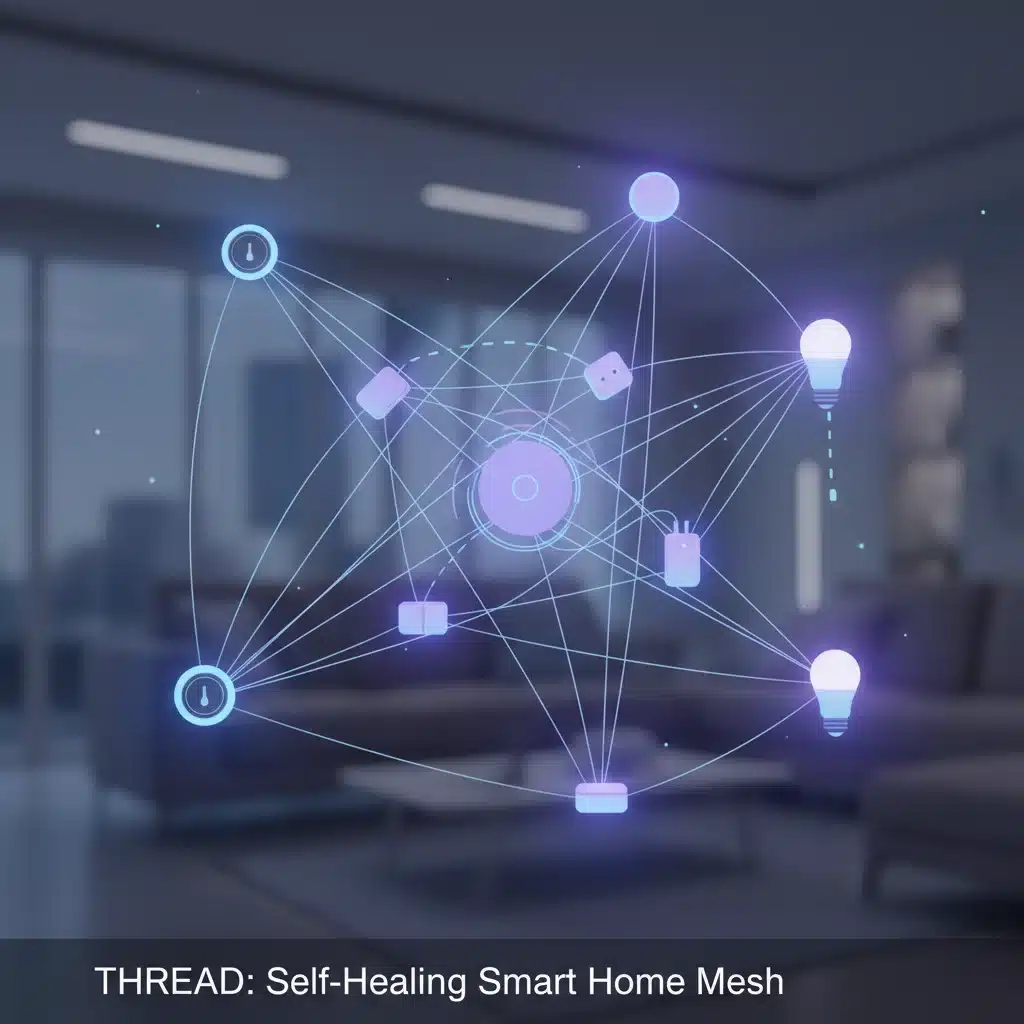
While Matter provides the application layer for communication, Thread is one of the underlying network protocols that Matter often leverages. Thread is a low-power, mesh networking technology specifically designed for smart home devices. It creates a self-healing, robust network where each device can act as a repeater, extending the range and reliability of your smart home network.
Understanding Thread’s Advantages
Unlike traditional Wi-Fi, which can be power-intensive and prone to interference in crowded environments, Thread offers several distinct advantages for small, battery-powered smart devices:
- Mesh Network: Thread devices form a mesh network, meaning they don’t all have to connect directly to a central hub. Instead, devices can relay messages to each other, creating a more resilient and extensive network coverage throughout your home. If one device goes offline, others can reroute traffic.
- Low Power Consumption: This is crucial for battery-powered sensors and devices that need to operate for months or even years without needing a battery change.
- Self-Healing: If a device leaves the network, Thread automatically reconfigures itself to maintain connectivity, ensuring your smart home remains operational.
- IP-Based: Like Wi-Fi, Thread is IP-based, which makes it compatible with Matter and allows for direct communication with other IP-enabled devices and the internet.
- Security: Thread networks are encrypted and secure, protecting your data and your home.
Thread’s Integration with Matter and Your Home
Many Matter-certified devices will utilize Thread as their primary communication protocol, especially for battery-powered sensors, smart locks, and lighting. A Thread border router (often built into devices like Apple HomePod mini, Google Nest Hub, or Amazon Echo devices) connects your Thread network to your Wi-Fi network, allowing your smart devices to communicate with your phone or the internet. This combination of Matter over Thread offers the best of both worlds: robust, low-power local communication with broad interoperability.
By April 2026, the proliferation of Thread-enabled devices and border routers will create dense, reliable mesh networks in many smart homes. This will significantly improve the responsiveness and stability of your smart devices, reducing latency and frustrating dropouts.
Wi-Fi 6 (and Beyond): The Backbone of High-Bandwidth Smart Home Standards
While Matter and Thread handle the low-power, localized communication, Wi-Fi remains the essential backbone for high-bandwidth smart home devices like security cameras, video doorbells, and smart displays. The latest iteration, Wi-Fi 6 (802.11ax), and its successor, Wi-Fi 6E (which adds the 6GHz band), bring significant improvements that directly benefit the smart home.
Key Advantages of Wi-Fi 6/6E for Smart Homes
- Increased Capacity: Wi-Fi 6 is designed to handle a greater number of connected devices simultaneously without a performance hit. As smart homes grow, this becomes critical.
- Faster Speeds: While not always necessary for every smart home device, faster speeds benefit video streaming from security cameras and quicker downloads for smart device updates.
- Improved Efficiency: Technologies like OFDMA (Orthogonal Frequency-Division Multiple Access) and TWT (Target Wake Time) make Wi-Fi 6 more efficient, allowing devices to communicate more effectively and conserve power.
- Reduced Latency: Lower latency means quicker response times for commands sent to your smart devices.
- Better Performance in Congested Environments: Wi-Fi 6 performs better in areas with many Wi-Fi networks, which is common in apartments and dense urban environments.
Wi-Fi’s Role in the Unified Smart Home by 2026
For devices that require higher bandwidth or constant internet access, Wi-Fi will continue to be the primary connection method. Matter will also run over Wi-Fi, allowing Wi-Fi-enabled devices to be part of the unified ecosystem. This means your smart TV, security cameras, and even some smart appliances will communicate with your Matter controller and other devices via your Wi-Fi network, all speaking the common Matter language.
Upgrading to a Wi-Fi 6 or 6E router is a smart investment for any evolving smart home. It provides the necessary bandwidth and efficiency to support a growing number of devices, ensuring that your home network doesn’t become a bottleneck for your smart home ambitions. As the April 2026 deadline approaches, a robust Wi-Fi network will be just as crucial as Matter and Thread in delivering a truly seamless experience.
Other Important Smart Home Standards and Technologies
While Matter, Thread, and Wi-Fi are the leading players, other technologies continue to play a role or are evolving alongside these new Smart Home Standards.
Zigbee and Z-Wave
These have been the workhorses of smart home connectivity for years, known for their low power consumption and mesh networking capabilities. Many existing smart home devices use Zigbee or Z-Wave. While Matter is designed to supersede these in many ways, hubs that support Zigbee or Z-Wave can often act as bridges to bring those devices into a Matter-enabled smart home. For instance, a smart hub might translate Zigbee commands into Matter commands, allowing older devices to participate in the new ecosystem. Expect to see continued support for these protocols, especially in devices that don’t receive Matter updates, but new product development will heavily favor Matter over Thread or Matter over Wi-Fi.
Bluetooth Low Energy (BLE)
BLE is widely used for direct device pairing, initial setup, and proximity-based interactions. Matter uses BLE for commissioning new devices, making the setup process much smoother. Many smart home devices will continue to incorporate BLE for these specific functions, even if their primary communication method is Thread or Wi-Fi.
Ethernet
For devices that require maximum reliability and bandwidth, such as certain smart home controllers or network video recorders, a wired Ethernet connection remains the gold standard. Matter also supports communication over Ethernet, ensuring that these critical components can be seamlessly integrated into your unified smart home.
Preparing Your Smart Home for April 2026: A Checklist
The April 2026 timeframe is not a hard cut-off where old devices suddenly stop working, but rather a significant milestone by which the new Smart Home Standards will be firmly established as the industry norm. Here’s how you can prepare your home:
- Identify Your Current Devices: Take an inventory of your existing smart devices. Research which ones might receive Matter updates (many popular brands are doing this) and which might become ‘legacy’ devices.
- Prioritize Matter-Certified Purchases: When buying new smart home gadgets, actively look for the Matter logo. This ensures future compatibility and ease of integration.
- Consider a Thread Border Router: If you plan on having many low-power smart devices, ensure you have at least one device that can act as a Thread border router (e.g., a newer smart speaker or hub from Apple, Google, or Amazon).
- Evaluate Your Wi-Fi Network: If you haven’t already, consider upgrading to a Wi-Fi 6 or 6E router to handle the increasing number of connected devices and ensure optimal performance for high-bandwidth applications.
- Stay Informed: The smart home landscape is dynamic. Follow tech news and manufacturer announcements to stay updated on firmware updates for your devices and new product releases.
- Plan for Phased Upgrades: You don’t need to replace everything at once. Gradually replace or upgrade devices as needed, prioritizing those that offer the most significant benefits from the new standards.
- Leverage Existing Hubs: If you have a hub that supports Zigbee or Z-Wave, check if it can act as a bridge to Matter. Many manufacturers are providing updates to enable this functionality, extending the life of your older devices.
The Benefits of a Unified Smart Home Ecosystem
The transition to these new Smart Home Standards will bring a multitude of benefits, transforming the smart home from a niche luxury to an accessible and integral part of modern living:
- True Interoperability: The most significant benefit is the ability for devices from different brands to work together seamlessly, eliminating frustrating compatibility issues.
- Enhanced User Experience: Simplified setup, unified control, and reliable performance will make smart homes easier and more enjoyable to use for everyone.
- Increased Security and Privacy: Robust security features and greater local control reduce reliance on the cloud and enhance data protection.
- Greater Choice and Flexibility: Consumers will have more options when purchasing devices, no longer being locked into a single brand’s ecosystem.
- Future-Proofing: Investing in Matter-certified devices ensures that your smart home will be compatible with future innovations and updates.
- Reduced Complexity: Fewer apps, fewer hubs, and a more intuitive setup process will significantly reduce the complexity often associated with smart home management.
- Energy Efficiency: Better communication and control can lead to more optimized energy usage across your home, saving money and reducing environmental impact.
Challenges and Considerations
While the future looks bright, there are still some challenges and considerations to keep in mind:
- Legacy Device Support: Not all older devices will receive Matter updates. Consumers will need to decide whether to upgrade or continue using a mixed ecosystem.
- Manufacturer Adoption Pace: While major players are on board, the pace of Matter adoption and firmware updates across all manufacturers may vary.
- Education: Understanding these new standards will be crucial for consumers to make informed purchasing decisions.
- Security Vigilance: While Matter has strong security, no system is entirely impervious. Users should still practice good smart home security habits, like strong passwords and regular updates.
Conclusion: Embracing the Future of Smart Home Standards
The period leading up to April 2026 marks a pivotal moment for the smart home industry. The convergence of Matter, Thread, and advanced Wi-Fi technologies is finally delivering on the long-held promise of a truly integrated, user-friendly, and secure smart home. By understanding these new Smart Home Standards, you can confidently navigate the evolving landscape, make informed purchasing decisions, and build a connected home that is not only smart but also seamlessly intuitive and truly future-proof.
The days of proprietary ecosystems and frustrating compatibility issues are drawing to a close. Embrace the new era of connectivity and unlock the full potential of your smart home.